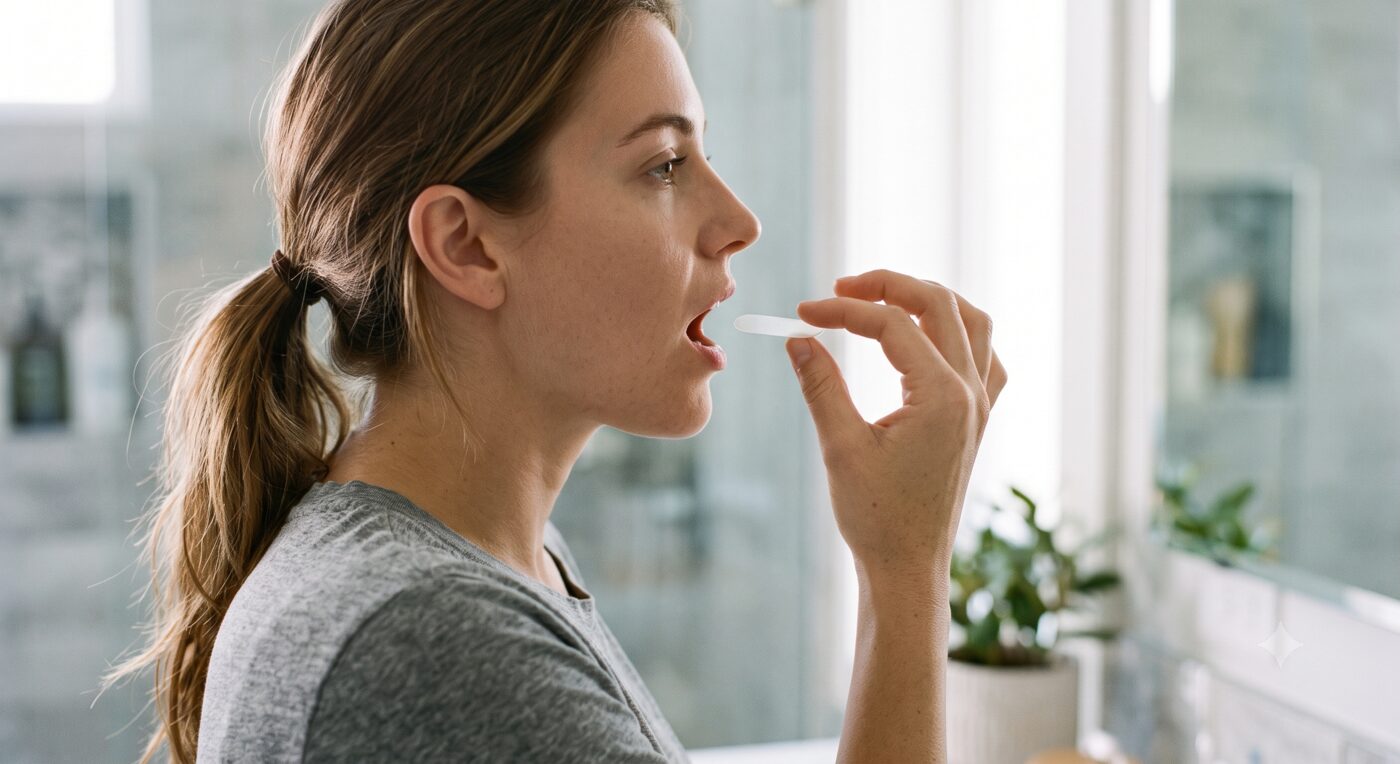
Over the years, buccal peptide delivery has gained interest for its ability to deliver peptide molecules through the inside of the cheek while supporting peptide stability and absorption without an injection. Not only does this route provide a needle-free way to administer peptides, but it can also reduce the need for a peptide to pass through the stomach and intestines before reaching the intended absorption site.
Since buccal peptide delivery uses the buccal mucosa as the delivery site, it can reduce the peptide’s initial exposure to stomach acid and digestive enzymes. This is useful because peptides are sensitive molecules that may be broken down by enzymes and may have limited absorption through the conventional oral route. Buccal delivery also avoids the same intestinal route that can lead to hepatic first-pass metabolism, bringing peptide protection, release control and mucosal absorption together in a single pathway.
What Is Buccal Peptide Delivery and How Does It Work?
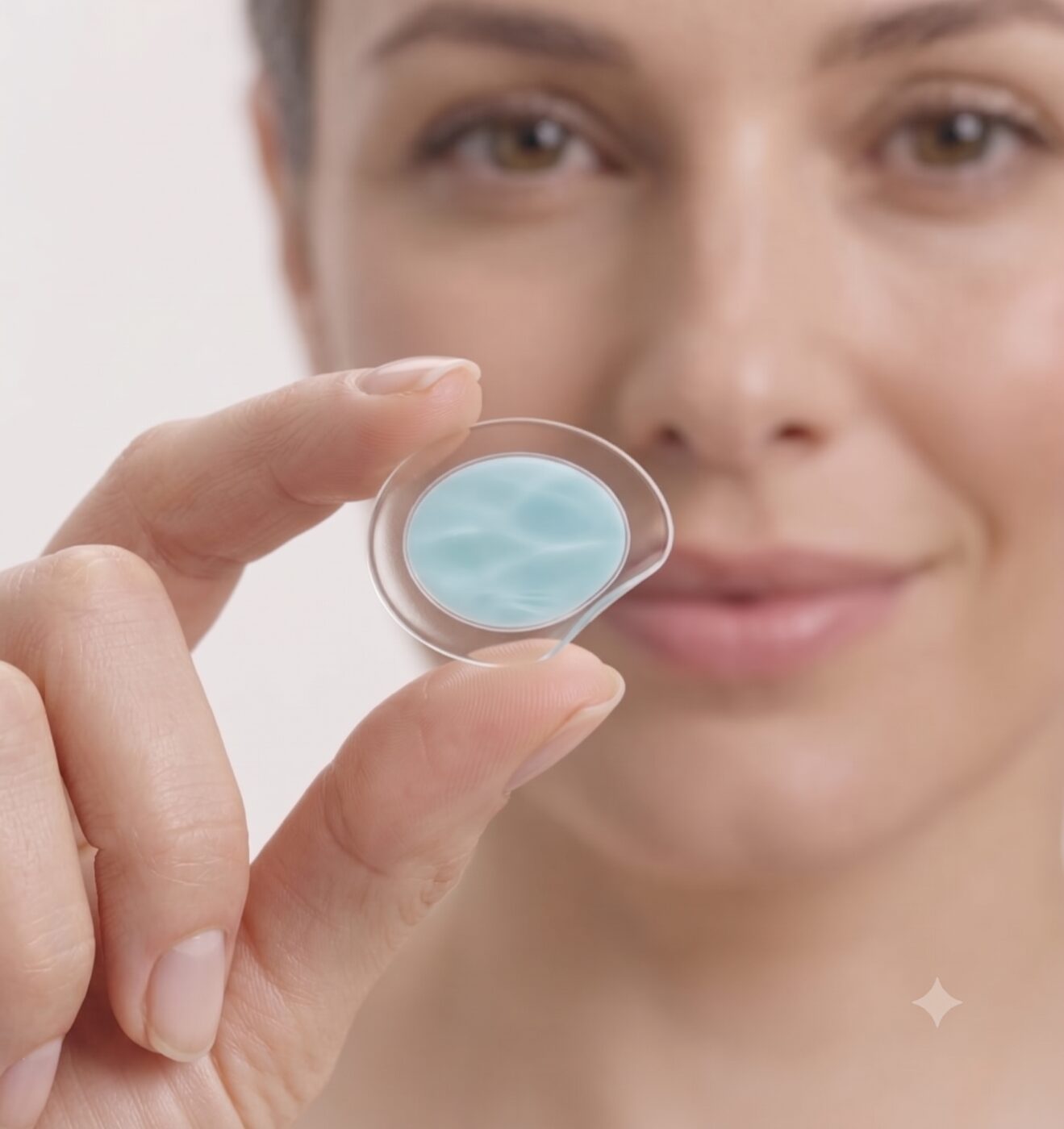
Buccal peptide delivery places a peptide against the inner lining of the cheek, known as the buccal mucosa. Instead of swallowing the peptide or administering it through an injection, the delivery system places the peptide on the cheek as the intended absorption site. A buccal patch can contain the peptide within a formulation designed to support stability and controlled release; once placed against the cheek, the peptide is released at the buccal surface and moves through the mucosal tissue toward the blood supply underneath. The basic process can be understood in five steps:
- The patch is placed against the cheek — the peptide-containing side sits against the buccal mucosa.
- The delivery system releases the peptide — the formulation controls how the peptide becomes available at the delivery site.
- The peptide reaches the buccal mucosa — the system keeps the peptide near the tissue where absorption is intended.
- The peptide moves through the buccal tissue — crossing the mucosal layers before reaching the blood vessels beneath.
- The peptide enters systemic circulation — after crossing the mucosa, it can enter the local blood supply and become available systemically.
This pathway differs from swallowed oral delivery. A swallowed peptide must deal with the GI environment, intestinal absorption and hepatic first-pass metabolism, whereas buccal delivery uses the oral mucosa as the absorption surface and can reduce exposure to the GI route.
How Does Buccal Delivery Compare With Other Peptide Delivery Routes?
Compared with swallowed oral products and injections, buccal delivery provides a needle-free route that uses the cheek as the intended absorption site and reduces the need for the peptide to pass through the stomach and intestines. This can be especially interesting for peptides because conventional oral delivery can be affected by enzymatic degradation, poor permeability and first-pass hepatic metabolism. The table below shows the key differences.
| Factor | Buccal peptides | Swallowed oral peptides | Injectable peptides |
|---|---|---|---|
| Delivery route | Through the buccal mucosa inside the cheek | Through the GI tract | Through injection |
| GI exposure | Reduced initial exposure | Direct exposure to the GI tract | Generally avoided |
| Absorption site | Buccal mucosa | Intestinal lining | Depends on injection route |
| First-pass metabolism | Can reduce hepatic first-pass exposure | Can occur after intestinal absorption | Generally bypassed |
| Needle required | No | No | Yes |
| Common format | Buccal patch or film | Tablet, capsule, liquid | Injection |
| Formulation focus | Stability, controlled release, mucosal contact and absorption | Stability, GI protection and intestinal absorption | Peptide stability and suitability for injection |
How Does First-Pass Metabolism Affect Peptide Bioavailability?
Peptide bioavailability refers to the amount of intact peptide that reaches systemic circulation and is available to act in the body. A swallowed peptide first enters the GI tract, where digestive enzymes can break it down; even if part survives and crosses the intestinal lining, the absorbed material can travel through the portal circulation to the liver, which may metabolize part of it before it reaches the wider circulation. This process is known as first-pass metabolism. Buccal delivery takes a different route: absorption through the buccal mucosa can provide access to systemic circulation while reducing exposure to the GI environment and hepatic first-pass metabolism. This does not mean every peptide will have high bioavailability — molecular size, structure, stability and permeability still affect the process, so formulation plays an important role.
What Happens to a Peptide After a Buccal Patch Is Applied?
A buccal patch does more than simply place a peptide inside the mouth. Once applied, the peptide moves through a series of stages that determine how it is released, reaches the buccal mucosa and moves toward systemic circulation.
- The patch is placed against the cheek — keeping the formulation at the delivery site and reducing the chance of it immediately moving into saliva.
- The peptide is released from the patch — a controlled-release design manages how much peptide becomes available at the mucosal surface.
- The peptide reaches the buccal mucosa — remaining near the tissue without needing to travel through the stomach and intestines.
- The peptide moves through the buccal tissue — toward the blood vessels beneath; because peptides are often large and hydrophilic, the formulation must support stability and suitable conditions for movement.
- The peptide enters systemic circulation — reaching the blood supply beneath the mucosa while reducing the need to pass through the GI tract.
What Factors Affect Peptide Absorption Through the Buccal Mucosa?
The buccal mucosa provides a useful absorption route, but peptide transport depends on several factors. Peptides generally have larger molecular sizes and lower membrane permeability than many small-molecule drugs, which makes movement across the tissue more dependent on formulation design. Saliva is another factor — continuous flow can dilute a formulation or move material away from the site, and the tongue, chewing and normal mouth movement can affect how long a system stays in place. For this reason, modern buccal systems can combine mucoadhesive materials, controlled-release structures and peptide-protective matrices to keep the peptide at the site, protect it during release and support movement through the mucosa.
5 Benefits of Buccal Peptide Delivery
By delivering peptides through the inside of the cheek, buccal peptide delivery combines a needle-free administration route with a delivery pathway that can reduce GI exposure. Five major benefits stand out:
- Needle-free administration: no injection is required, making delivery easier to include in a regular dosing routine.
- Reduced GI exposure: the patch delivers the peptide through the cheek rather than sending it into the stomach and intestines, reducing exposure to acid and enzymes.
- Reduced exposure to first-pass metabolism: buccal absorption provides a route that can reduce the hepatic first-pass effect associated with swallowed peptides.
- Controlled peptide release: materials such as hydrogels and polymers can build delivery systems around specific release needs.
- Formulation flexibility: hydrogel matrices, mucoadhesive materials and multilayer designs let formulation teams work around each peptide’s properties.
How NeoPep Is Improving Buccal Peptide Delivery
NeoPep has developed a buccal patch platform built around TD‑IntelGel and Muco‑SmartSeal. Together, these technologies focus on different parts of the delivery pathway, including peptide stability, controlled trans-diffusion and maintaining contact with the buccal mucosa. A conventional oral dissolving strip and a buccal peptide patch are not necessarily designed to deliver a peptide in the same way: a strip dissolves in the mouth and releases its contents, where some material may be swallowed, whereas a dedicated buccal patch is designed around keeping the peptide at the cheek and supporting movement through the buccal mucosa.
TD-IntelGel: Supporting Peptide Stability and Controlled Trans-Diffusion
TD‑IntelGel is a hydrogel-based technology designed to hold peptides within a stabilized matrix while supporting controlled trans-diffusion through the buccal membrane. NeoPep describes it as a tri-layer buccal patch system whose hydrogel matrix is designed to stabilize peptides and support controlled trans-diffusion.
Peptide stability. Peptides can be sensitive to moisture, enzymes and other conditions, so a stabilized matrix can help protect the peptide within the delivery system. NeoPep’s product information also describes a cold manufacturing process and a lyophilized-protection approach intended to preserve peptide structure and potency.
Controlled trans-diffusion. TD‑IntelGel is designed to release peptides in a controlled manner through the buccal membrane rather than simply dissolving the peptide into the mouth — supporting movement from the formulation toward and across the buccal tissue.
Muco-SmartSeal: Supporting Buccal Contact
Muco‑SmartSeal addresses another part of the process: keeping the patch positioned against the buccal mucosa. The system surrounds the patch edges to support prolonged contact while helping limit peptide loss into saliva. Its role can be understood through three functions:
- Maintaining patch position: helps keep the patch against the buccal surface during use.
- Limiting peptide loss: helps reduce the amount of peptide that can move into saliva.
- Supporting buccal absorption: helps keep the formulation at the intended delivery site for the delivery period.
Together, TD‑IntelGel and Muco‑SmartSeal address different parts of the same system — the peptide-containing matrix and controlled trans-diffusion on one side, and maintaining the delivery environment at the buccal surface on the other.
How Is the NeoPep Patch Different From a Conventional Oral Strip?
Both products can be used inside the mouth, but their delivery goals differ. A conventional oral dissolving strip is generally designed to dissolve and release its contents in the oral cavity, where some material may be swallowed. A dedicated buccal patch is designed to keep the peptide at the cheek and support transmucosal delivery.
| Feature | Conventional oral dissolving strip | NeoPep buccal patch |
|---|---|---|
| Primary design | Dissolve and release contents in the mouth | Support buccal peptide delivery |
| Peptide matrix | Depends on strip formulation | TD-IntelGel hydrogel matrix |
| Release approach | Dissolution and release | Controlled trans-diffusion |
| Buccal contact | Depends on the strip | Supported by Muco-SmartSeal |
| Saliva exposure | Released material can mix with saliva | Designed to reduce peptide loss into saliva |
| First-pass route | Swallowed material can be subject to first-pass metabolism | Buccal absorption can reduce hepatic first-pass exposure |
What Does the 81% TD-IntelGel Result Mean?
NeoPep’s product information reports an 81% efficacy result for the TD‑IntelGel buccal patch in PermeaPad testing, compared with 32% for oral dissolving strips, 2% for capsules and 1% for tablets. These results are useful for showing how the buccal patch performed in that test system. However, an in-vitro permeability or efficacy result should not automatically be described as 81% clinical bioavailability — clinical bioavailability requires pharmacokinetic data showing how much intact peptide reaches systemic circulation in a living subject. The 81% result can therefore be presented as evidence supporting the enhanced delivery and absorption performance of the TD‑IntelGel system in the reported test, while human bioavailability claims should be supported by appropriate clinical data.
The NeoPep Buccal Patch Delivery Process
- Patch placement: the buccal patch is placed against the inside of the cheek, peptide-containing side toward the mucosa.
- Muco-SmartSeal establishes contact: helping the patch remain positioned while reducing peptide movement into saliva.
- TD-IntelGel protects and holds the peptide: the peptide remains within the stabilized hydrogel matrix during the delivery period.
- Controlled trans-diffusion begins: TD-IntelGel supports controlled movement of the peptide toward and through the buccal membrane.
- The peptide reaches systemic circulation: after crossing the buccal tissue, it reaches the blood supply beneath the mucosa.
Frequently Asked Questions
What is buccal peptide delivery?
A method of delivering peptides through the mucosal tissue inside the cheek. A patch holds the peptide at the buccal mucosa so it can be released and absorbed through the tissue.
How does buccal peptide delivery affect bioavailability?
It can reduce GI degradation and hepatic first-pass exposure, two factors that limit the systemic availability of swallowed peptides. The final bioavailability still depends on the peptide and its formulation.
Does buccal peptide delivery avoid the stomach?
Yes. A peptide intended for buccal absorption does not need to pass through the stomach before reaching the buccal absorption site.
Is buccal delivery a non-injectable method?
Yes. It does not require a needle and uses the cheek as the intended absorption site, making it a form of non-injectable peptide delivery.
What is the buccal mucosa?
The soft tissue lining on the inside of the cheek. It can serve as a site for systemic delivery because absorbed compounds can move through the mucosal tissue toward the underlying blood supply.
What factors affect buccal peptide absorption?
Peptide size, molecular structure, stability, permeability, release rate and time at the mucosal surface, plus saliva and the natural barrier properties of the buccal epithelium.
What is TD-IntelGel?
NeoPep’s hydrogel-based buccal peptide delivery technology — a tri-layer system designed to support peptide stability and controlled trans-diffusion through the buccal membrane.
What is Muco-SmartSeal?
NeoPep’s patch-contact technology. It helps maintain contact between the patch and buccal mucosa while helping reduce peptide loss into saliva.
Conclusion
By offering a needle-free route for peptide administration, buccal peptide delivery provides a convenient way to deliver peptides through the inside of the cheek while creating a delivery pathway that can reduce initial exposure to the GI tract and hepatic first-pass metabolism.
Not only can this help protect peptides from some of the conditions associated with swallowed delivery, but it also brings peptide stability, controlled release and buccal absorption together in one format. As the demand for non-injectable peptide delivery continues to increase, buccal delivery is emerging as a promising approach for improving peptide administration while supporting more targeted delivery through the buccal mucosa.
Building a peptide product?
Talk to our team about developing your molecule on the TD‑IntelGel buccal delivery platform.
Partner with NeoPep