When it comes to peptide delivery, choosing between injectable and oral routes can make a big difference in how a peptide is absorbed and how much becomes available in the body. With nearly 100 peptide drugs now approved worldwide, the choice of delivery route has become an important part of peptide drug development. Both routes are designed to deliver peptides, but they follow different pathways and face different barriers.
Injectable peptides can bypass the stomach and intestines, helping reduce exposure to digestive conditions that may break down sensitive peptide molecules. Oral peptides, on the other hand, can be delivered through the GI tract or oral mucosal routes such as buccal delivery. By understanding the differences between oral and injectable peptides, you can better understand how each route affects peptide absorption and bioavailability — from the way the peptide is delivered to the amount that reaches the bloodstream.
Difference Between Oral and Injectable Peptides
Oral and injectable peptides use different routes to deliver peptide molecules into the body. Injectable delivery can bypass the digestive system, while oral delivery can involve either the GI tract or an oral mucosal site. These differences can affect peptide stability, absorption, bioavailability and formulation needs. The table below shows the key differences.
| Factor | Oral peptides | Injectable peptides |
|---|---|---|
| Delivery route | Through the mouth | Through injection |
| Main delivery site | GI tract or oral mucosa, depending on format | Tissue or bloodstream, depending on injection type |
| Digestive exposure | Depends on the oral route | Generally avoided |
| Peptide breakdown | Can occur in the GI tract | Less exposed to digestive breakdown |
| Needle required | No | Yes |
| Bioavailability | Highly dependent on route and formulation | Depends on peptide, route, and formulation |
| Main practical benefit | Needle-free administration | Can bypass the digestive system |
| Main challenge | Overcoming absorption barriers | Needle use and administration requirements |
How Delivery Route Affects Peptide Absorption and Bioavailability
When a peptide is introduced into the body, its delivery route can affect its absorption (how much moves into the bloodstream) and its bioavailability (how much becomes available in circulation). Oral and injectable peptides follow different paths, so they face different conditions and barriers before reaching circulation.
Absorption
Absorption is the process through which a peptide moves from its delivery site into the bloodstream, and the delivery route changes the barriers the peptide faces along the way. For injectable peptides, the peptide can bypass the stomach and intestines, so it has less exposure to digestive enzymes and GI conditions. For oral peptides, absorption depends on where and how the peptide is delivered: swallowed peptides pass through the GI tract, while newer approaches such as buccal patches place the peptide against the inside of the cheek. The buccal mucosa can provide a different absorption pathway because the peptide does not need to travel through the stomach and intestines — though it still needs to cross the mucosal tissue.
Bioavailability
Bioavailability refers to the amount of an administered peptide that reaches systemic circulation in an available form. With injectable peptides, bypassing the GI tract can reduce exposure to digestive breakdown, though bioavailability can still vary by peptide, injection route, dose and formulation. With swallowed oral peptides, bioavailability can be limited by digestive breakdown, limited intestinal absorption and first-pass metabolism. A buccal patch follows a different route: peptides absorbed through the buccal mucosa can avoid the GI tract and hepatic first-pass metabolism for the fraction that enters systemic circulation through the oral mucosa.
How Injectable Peptides Are Delivered
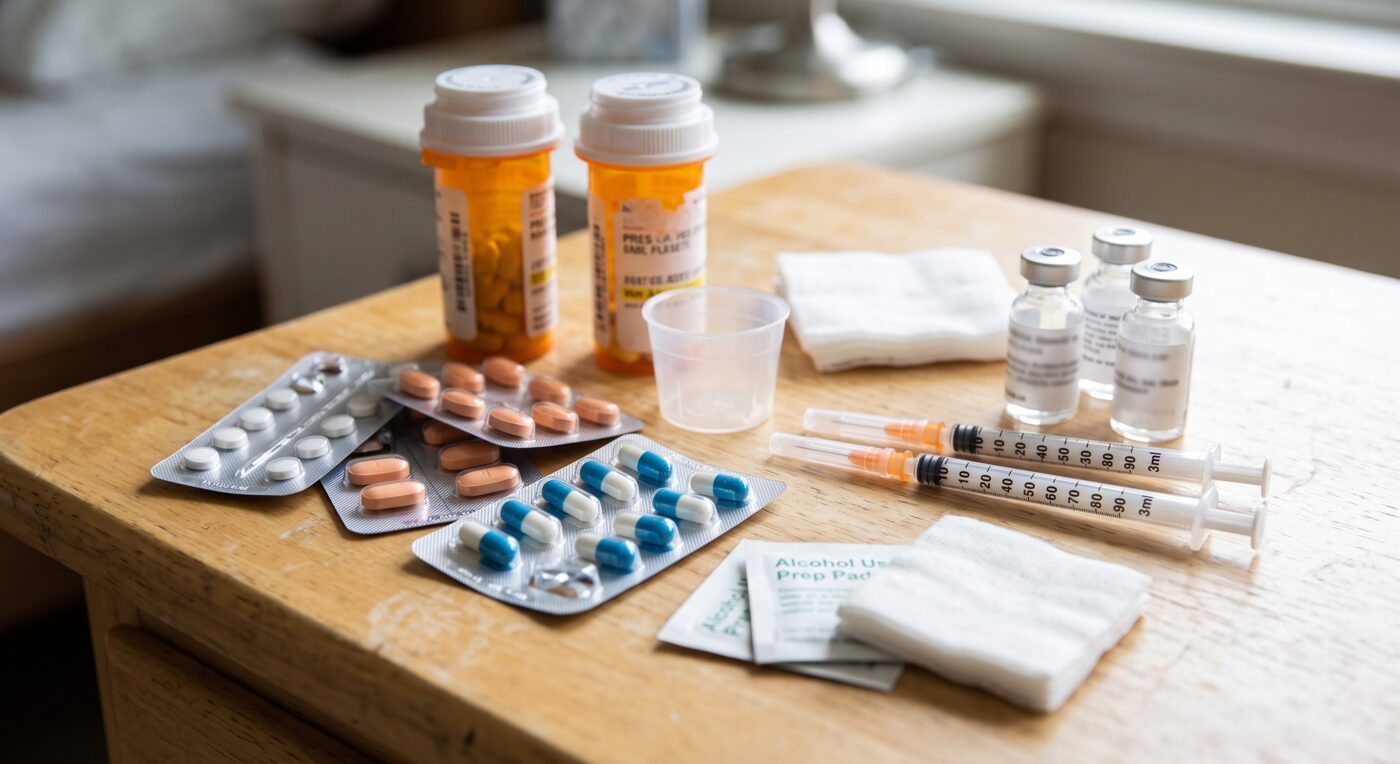
Injectable delivery introduces a peptide through a needle rather than sending it through the digestive tract. Depending on the product and intended use, the peptide may be administered into tissue or directly into circulation. This route can avoid many of the problems faced by swallowed peptides, because the peptide does not have to survive the full journey through the stomach and intestines.
Benefits of Injectable Peptide Delivery
One major benefit is that an injection can bypass the digestive system, protecting a peptide from acidic conditions and digestive enzymes and avoiding the need to cross the intestinal lining. Other practical benefits include:
- Reduced digestive exposure: the peptide does not need to pass through the stomach and intestines.
- Established delivery route: injection is a well-established way to administer many peptide medicines.
- Direct administration: the peptide is introduced through a defined injection site.
- Less reliance on GI stability: the formulation does not have to survive the entire digestive process.
Practical Limitations of Injectable Peptides
The most obvious limitation is needle use. Repeated administration means using a needle each time, which can be uncomfortable, and injection-site soreness, redness, or irritation may occur. There is also a need to follow the correct injection method, and depending on the product, storage and preparation may require extra care. For people who need regular peptide administration, these factors can make injections less convenient as part of an ongoing routine.
How Swallowed Oral Peptides Are Delivered
After a person takes a tablet, capsule, or liquid, the peptide enters the digestive system, where it encounters stomach acid, digestive enzymes, mucus, the intestinal lining, and other processes before any intact peptide can reach circulation. Research on oral peptide delivery identifies enzymatic degradation, poor intestinal permeability and first-pass hepatic metabolism among the key factors that can limit systemic bioavailability.
Digestive Enzymes, Stomach Acid and the GI Environment
The digestive system is designed to break down proteins and peptides, so enzymes in the stomach and intestines can affect a peptide before it reaches an absorption site. It is like sending a fragile package through a place where everything is designed to take packages apart — the delivery system needs to protect the contents long enough to reach the right destination. The stomach’s acidic environment is one of the first major barriers, so the formulation may need specialised coatings or other strategies designed around the peptide’s properties.
Intestinal Absorption
Even if the peptide survives digestion, it must cross the intestinal lining. Peptides are generally larger and less able to cross biological membranes than many small-molecule drugs, so a swallowed peptide needs to solve two problems:
- Stay intact long enough to reach the absorption site.
- Cross the intestinal barrier in a useful amount.
Poor intestinal permeability is a major reason why many peptide medicines have traditionally required non-oral routes of administration.
First-Pass Metabolism
After a peptide is absorbed from the intestine, it can travel to the liver before entering the wider bloodstream, and some of it may be broken down or changed there. This means the amount of peptide swallowed is not necessarily the amount that eventually reaches systemic circulation — first-pass metabolism is another factor that affects the bioavailability of orally delivered peptides.
How Buccal Peptides Differ From Swallowed Oral Peptides
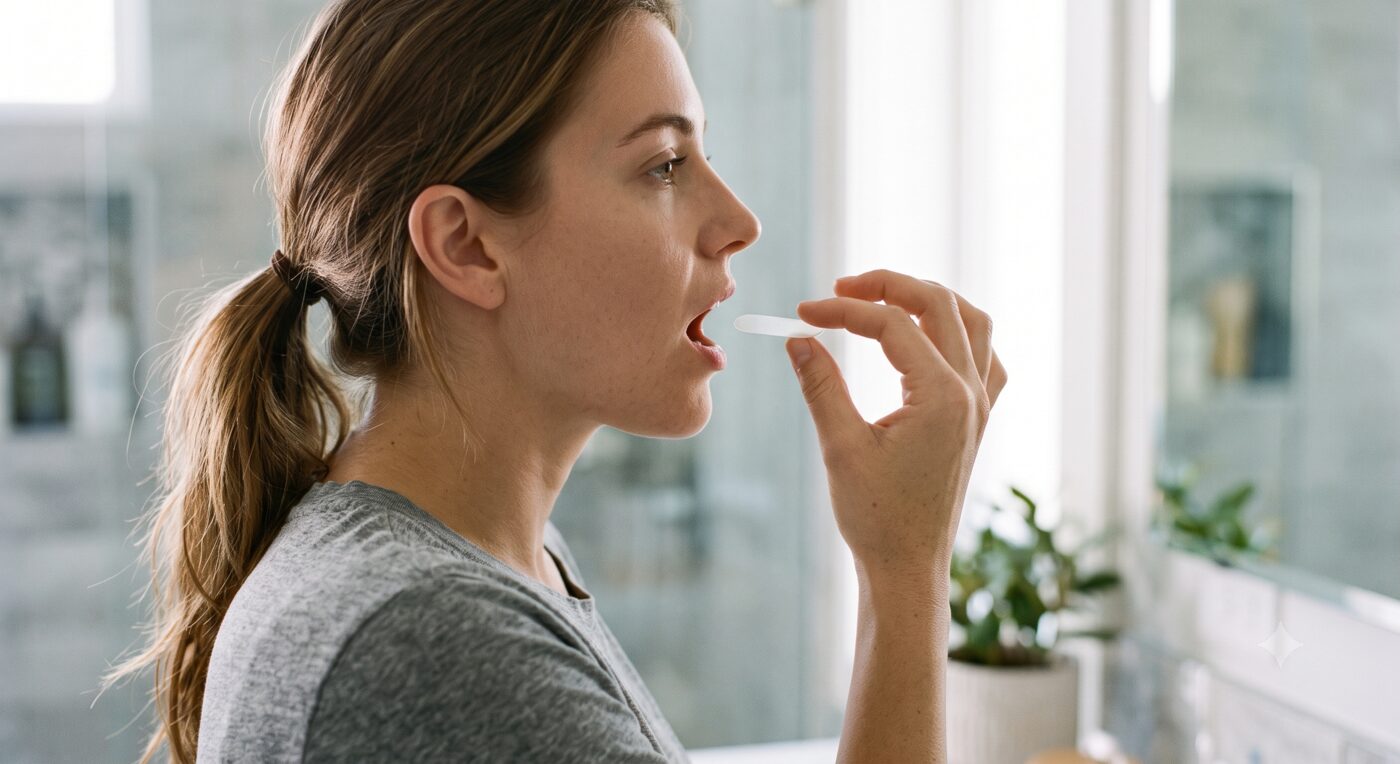
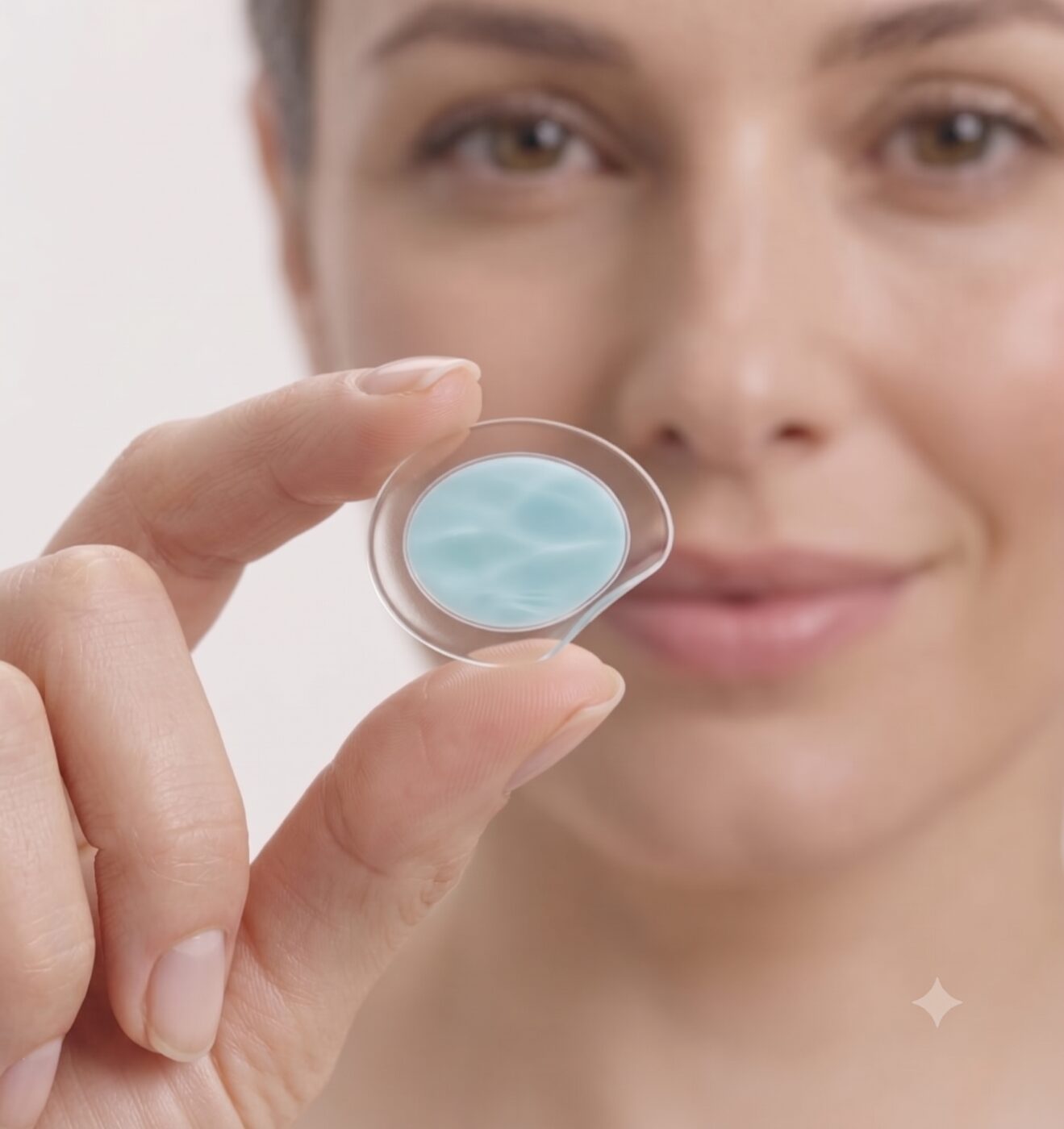
While buccal delivery is a form of oral peptide delivery, it works differently from swallowing a tablet. Instead of sending the peptide into the stomach, a buccal patch is placed against the inside of the cheek (the buccal mucosa), and the formulation remains in contact with this tissue, allowing the peptide to be released close to the absorption site. This can reduce the peptide’s initial exposure to the stomach and intestines and creates a different path to systemic circulation.
The Buccal Mucosa as a Delivery Site
The buccal mucosa is the soft tissue lining inside the cheek. It is accessible and has a rich blood supply, which makes it a useful area for systemic drug delivery. For peptides, it offers a route that can avoid GI degradation and hepatic first-pass metabolism for the portion absorbed through the oral mucosa. It is not a barrier-free route, however: peptides still need to cross the mucosal tissue, and their size, solubility, stability, charge and permeability affect how well they move through this barrier, while saliva can dilute or remove material from the site.
Buccal Patches vs Swallowed Oral Products
- Swallowed oral product: the peptide is swallowed, passes through the stomach and intestines, and then crosses the intestinal lining before reaching the bloodstream.
- Buccal patch: the patch is placed against the buccal mucosa, where the peptide is released and can cross the cheek tissue to enter circulation.
By bringing the peptide closer to the absorption site and reducing its exposure to the GI tract, buccal delivery offers a promising approach for oral peptide administration.
Why Buccal Patches Stand Out in Oral Peptide Delivery
Unlike injectable and conventional swallowed formats, buccal patches offer a more targeted approach to oral peptide delivery. Because the patch keeps the peptide in contact with the buccal mucosa, it can support controlled release and allow the peptide to be delivered closer to the absorption site. Key advantages include:
- Reduced GI exposure: the patch releases the peptide at the cheek rather than sending it into the stomach, reducing exposure to acid and digestive enzymes.
- Reduced first-pass exposure: for the fraction absorbed through the buccal mucosa, the route can avoid the hepatic first-pass pathway.
- Defined delivery site: the patch keeps the formulation close to a selected area of buccal tissue.
- Controlled peptide release: the patch can manage how the peptide leaves the delivery system over a set period.
- Needle-free administration: a practical option for people who prefer a needle-free format, especially for repeated dosing.
- Formulation flexibility: different polymers, hydrogels, adhesion systems and release structures can be matched to each peptide.
How NeoPep Is Advancing Buccal Peptide Delivery
NeoPep has created an advanced buccal patch technology designed to provide a needle-free approach to peptide delivery. It has developed TD‑IntelGel and Muco‑SmartSeal to address key parts of the buccal delivery process, including peptide stability, controlled release, and contact with the buccal tissue. Together, these technologies support peptide protection, controlled release, and mucosal contact.
TD-IntelGel: Supporting Peptide Stability and Release
TD‑IntelGel is a hydrogel-based technology designed to hold peptides within the delivery system while supporting controlled release. Its role goes beyond simply carrying the peptide — a delivery system needs to keep the molecule stable, control its release, and make it available close to the absorption site.
Supporting peptide stability. The hydrogel matrix is designed to provide an environment that helps maintain the peptide during delivery, because it needs to remain stable within the formulation before it is released at the buccal mucosa. NeoPep describes TD‑IntelGel as a stabilised hydrogel system intended to help preserve peptide structure and potency.
Supporting controlled release. Rather than making the full peptide content available at once, the technology supports a more controlled release during the delivery period, providing a structure in which the peptide is held before moving toward the buccal tissue.
Supporting trans-diffusion through the buccal membrane. NeoPep describes TD‑IntelGel as a system designed to support controlled trans-diffusion through the buccal membrane, so the peptide moves toward the mucosal tissue rather than first entering the stomach and intestines.
How Does Muco-SmartSeal Support Buccal Patch Contact?
A patch needs to stay positioned against the inside of the cheek so the formulation remains close to the intended absorption site. Saliva is constantly present and can dilute or wash away formulations, reducing the time a peptide remains in contact with the tissue. Muco‑SmartSeal is designed to address this by surrounding the edges of the patch. Its role can be understood through three functions:
- Maintaining patch position: helps keep the patch against the buccal surface during use.
- Supporting consistent tissue contact: helps maintain contact between the formulation and the buccal tissue.
- Reducing peptide loss: helps limit movement of the formulation into saliva, keeping it close to the intended absorption site.
While TD‑IntelGel focuses on the peptide within the delivery system, Muco‑SmartSeal focuses on the physical contact between the patch and the buccal tissue — together addressing different parts of the same buccal delivery process.
Frequently Asked Questions
What is the difference between oral and injectable peptides?
The main difference is how the peptide enters the body and reaches the bloodstream. Injectable peptides are introduced through an injection, while oral peptides are administered through the mouth and can use different pathways such as swallowed delivery or buccal delivery through the cheek.
Why are peptides difficult to deliver through swallowed oral products?
Peptides can be affected by digestive enzymes, stomach conditions, limited intestinal permeability and first-pass metabolism, which can reduce the amount of intact peptide that reaches systemic circulation.
Are buccal patches considered oral peptide delivery?
Yes. Buccal delivery is an oral mucosal route. The patch is placed inside the cheek rather than swallowed and sent through the GI tract.
Do buccal peptides pass through the stomach?
Peptide absorbed through the buccal mucosa does not need to pass through the stomach first. However, any portion that is swallowed can enter the GI tract.
What is TD-IntelGel?
TD-IntelGel is NeoPep’s hydrogel-based peptide delivery technology, designed to hold and stabilise peptides while supporting controlled release and movement toward the buccal mucosa.
What is Muco-SmartSeal?
Muco-SmartSeal is NeoPep’s technology designed to help maintain contact between the buccal patch and the cheek and to reduce peptide loss into saliva.
What factors affect oral peptide bioavailability?
Peptide stability, enzymatic degradation, permeability, formulation, release, absorption site and metabolism. For swallowed peptides, GI degradation, limited intestinal permeability and hepatic first-pass metabolism can all affect systemic availability.
Conclusion
When comparing oral vs injectable peptides, the main difference lies in how the peptide enters the body and the barriers it encounters before reaching the bloodstream. Injectable peptides can bypass the digestive system, while oral peptide delivery offers a needle-free approach. Within oral delivery, buccal patches provide a targeted way to deliver peptides through the buccal mucosa, supporting peptide stability, controlled release, and absorption.
Buccal patches bring together several useful features in one format — close contact with the buccal tissue, controlled release, peptide protection, and convenient administration — making them a strong and targeted approach to oral peptide delivery, especially where the delivery system needs to support both stability and absorption.
Building a peptide product?
Talk to our team about developing your molecule on the TD‑IntelGel buccal delivery platform.
Partner with NeoPep